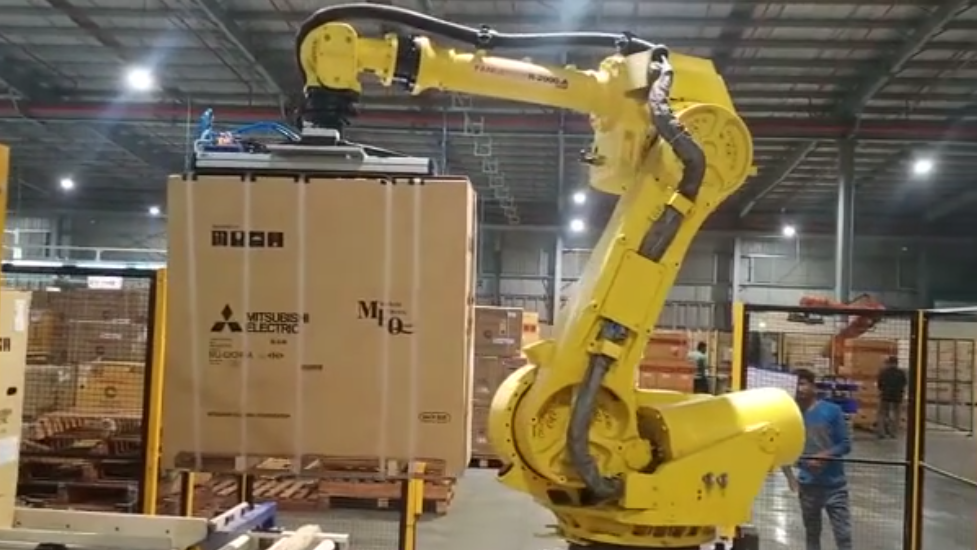
Robotic Material Handling for Connected Production Operations
-
Automated movement, positioning and
transfer of components between
production stages
-
Robotic picking, handling, orientation
and placement of industrial workpieces
-
Integration of industrial robots with
conveyors, fixtures, machines and
material transfer equipment
-
Handling of raw materials,
semi-finished components and
finished products
-
Coordinated material movement across
individual workstations and
manufacturing operations
-
Customized robotic handling systems
based on component characteristics
and production requirements
Key Considerations in Industrial Material Handling
-
Handling components with different
dimensions, shapes, weights and
surface characteristics
-
Maintaining accurate component
orientation and placement during
picking and transfer
-
Coordinating material movement
between multiple machines,
conveyors and workstations
-
Selecting suitable grippers and
end-of-arm tooling for different
workpiece geometries
-
Evaluating robot payload, reach,
movement paths and cycle time
-
Integrating robotic systems with
existing production equipment
and control interfaces
-
Maintaining safe robot operation,
equipment access and material flow
Engineering Efficient Robotic Material Movement
-
Assessment of workpiece characteristics,
pickup and placement locations,
and transfer requirements
-
Robot selection based on payload,
reach, handling requirements
and workspace constraints
-
Customized grippers and
end-of-arm tooling arrangements
for component handling
-
Robot programming and motion
planning for accurate component
transfer and positioning
-
Integration with conveyors,
fixtures, machines and relevant
control interfaces
-
Robot simulation and reach
assessment for the proposed
application
-
System integration, installation
and commissioning
Greenfield & Brownfield Material Handling Automation
Greenfield Environment
-
Planning robotic handling
stations within new production layouts
-
Robot selection based on
payload, reach and transfer requirements
-
Planning component pickup,
placement and transfer locations
-
Integration of conveyors,
fixtures and peripheral equipment
-
Coordinated design of robotic
material handling cells
Brownfield Environment
-
Robotic integration within
existing production facilities
-
Adaptation to available
shop-floor space and equipment layout
-
Integration with existing
conveyors, machines and fixtures
-
Assessment of existing
material flow and transfer points
-
Safety integration and
coordination with existing
production equipment
Robotic Handling and Material Transfer Capabilities
-
Robotic picking and placement
of components at designated locations
-
Automated loading and unloading
of manufacturing machines
-
Component transfer between
production stations and operations
-
Workpiece rotation, reorientation
and positioning for subsequent operations
-
Customized gripping and
end-of-arm tooling solutions
-
Conveyor, fixture and
positioning station integration
-
Automated stacking, arrangement
and component transfer where
required by the application
The IRTI Advantage in Robotic Material Handling
-
Application-specific robotic
system engineering and integration
-
Customized robot and material
handling configurations
-
Gripper and end-of-arm tooling
integration based on workpiece requirements
-
Robot programming, motion planning
and simulation support
-
Integration with manufacturing
equipment and material transfer systems
-
Coordinated engineering,
installation and commissioning support